Tportstick Gaming Trends from theportablegamer: The Future of Portable Gaming
Have you ever looked at your phone or handheld device and thought, “This feels more like a real gaming setup every day”? You’re not imagining it. Portable gaming has quietly become one of the most exciting corners of the entire gaming world, and it’s moving fast.
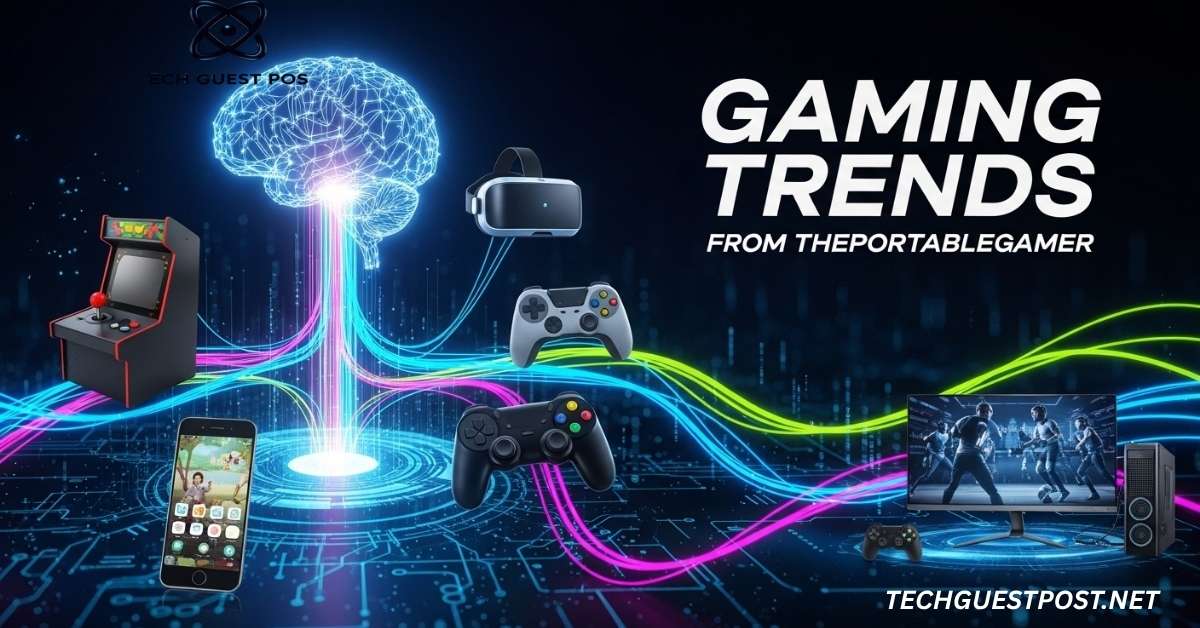
From the way developers are rethinking ergonomic gaming design to how players now expect console-quality graphics on a device that fits in their back pocket, the shift is real and it’s accelerating. Tportstick gaming trends from theportablegamer have been at the center of this conversation, tracking everything from hardware leaps to changing player behavior patterns.
This article digs into what’s actually happening, where it’s heading, and why it matters to you whether you’re a casual gamer squeezing in ten minutes during lunch or a dedicated player who games for hours every evening.
The Rise of Portable Gaming Devices
Not long ago, portable gaming meant a bulky device with limited games and a battery that died before you finished a level. Things look very different now.
Portable gaming devices today are genuinely powerful. Versatile handheld devices are being built with processing power that rivals mid-range home consoles. The ergonomic designs have improved dramatically too. Manufacturers are finally paying attention to how a device actually feels in your hands during long sessions.
Hybrid consoles changed the game in a big way. The idea that one device could work both at home on your TV and on the go opened a door that the industry hasn’t looked back from. Now, more companies are chasing that same flexibility.
What’s driving this? A few things. Commutes are longer. Schedules are tighter. People want gaming that fits their life, not the other way around. Shorter gameplay sessions have become the norm, and developers are designing around that reality. Levels are shorter. Checkpoints are more frequent. The whole experience is being tailored to the modern player.
Theportablegamer has consistently highlighted how this shift in player behavior patterns is reshaping not just hardware but the entire approach to game design. And that connection between device and design is only getting tighter.
Read More: Why Innerlifthunt Game Postponed – Full Breakdown of the Real Reasons
Cloud Gaming and Streaming Integration
Here’s where things get genuinely exciting. Cloud gaming integration is turning portable devices into something they never could have been on their own, powerful enough to run games that would normally require expensive hardware.
Think about it this way. Instead of cramming all the processing power into a small device, the heavy lifting happens on remote servers. Your handheld just needs a good screen, solid controls, and a stable internet connection. The result? You can play titles that would have been impossible on portable hardware just a few years ago.
Streaming platforms have started competing hard for this space. The race to own the cloud gaming experience is heating up, and portable devices are right at the center of that battle.
Fast loading times have become a key expectation. Players won’t sit through long waits on a device they picked up for a quick session. Cloud gaming, when done well, delivers on that. Games launch quickly, updates happen in the background, and you’re in within seconds.
One of the biggest wins here is synchronized progress. You start a game on your handheld during your commute, and when you get home and switch to your TV setup, your progress is exactly where you left it. That kind of seamless experience is what players now expect as standard, not a bonus feature.
Game libraries accessible through cloud services are also expanding rapidly. You’re no longer limited by storage space or what physically fits on a cartridge. Your entire library travels with you.
Cross-Platform Gaming Expansion
A few years back, playing with your friends often meant everyone needed the same console. That wall is coming down fast.
Cross-platform gaming has moved from novelty to expectation. Players now assume they can connect with friends regardless of what device they’re on. Portable gaming sits right in the middle of this trend. You might be on a handheld while your friend is on a home console and another is on a PC. The game doesn’t care anymore, and that’s a massive shift.
For portable gaming specifically, this opens up the player pool significantly. Online gaming communities thrive when the barrier to entry is low. More players online means better matchmaking, more active game servers, and a more vibrant overall experience.
Developers are building with cross-platform compatibility as a baseline requirement now, not an afterthought. That means portable versions of games are being developed alongside their console and PC counterparts rather than being stripped-down ports. That distinction matters. You’re getting the real game, not a lesser version.
Gaming connectivity has improved alongside this trend. Better network chips in portable devices, improved Wi-Fi standards, and lower latency options have made online play from a handheld far more reliable than it used to be.
The Influence of Mobile Gaming Culture
Mobile gaming doesn’t always get the respect it deserves in serious gaming conversations. That’s changing, and honestly it should have changed sooner.
Mobile gaming influence has quietly reshaped how all portable gaming is thought about and designed. Touch controls have forced developers to rethink interfaces from the ground up. User-friendly interfaces are now a hard requirement, not a nice-to-have. If something takes too many steps to access, players leave.
Casual and dedicated gamers now exist on the same platforms. That’s a direct result of mobile gaming culture bleeding into the broader portable space. Games need to be approachable enough for someone who games once a week but deep enough to satisfy someone who plays every day. Hitting both of those targets at once is genuinely difficult, and the developers getting it right are the ones pulling ahead.
Gaming personalization has become a major focus. Mobile gaming trained players to expect experiences tailored to them. Recommended games, adaptive difficulty, personalized interfaces. These expectations have migrated to handheld consoles and dedicated portable devices.
Tportstick gaming trends from theportablegamer have noted how this mobile influence is pushing even traditional portable gaming makers to rethink their approach to onboarding, monetization, and long-term player retention.
Hardware Innovation and Performance Improvements
The hardware side of portable gaming is where the most visible progress is happening, and the pace of improvement is genuinely impressive.
Battery life optimization is one of the most talked-about areas. Nothing kills a portable gaming session faster than a device dying on you mid-game. Manufacturers have made serious gains here through more efficient chips, smarter power management systems, and better battery chemistry. You’re getting longer sessions without the device running hot in your hands.
High-quality graphics on portable devices used to require significant trade-offs. That balance has shifted considerably. Modern portable hardware can deliver visuals that would have seemed like pure fantasy on a handheld device a decade ago. Console-quality graphics are no longer just a marketing phrase. In many cases it’s an accurate description.
AI in game design is starting to play a role in how games look and perform on portable hardware. AI-driven upscaling, for example, allows games to render at lower resolutions internally and then intelligently enhance the image output. The result is sharper visuals without the battery drain of full native rendering.
Augmented reality gaming is also opening new territory. The idea of your physical environment becoming part of the game experience is no longer a fringe concept. As portable hardware becomes more capable of handling AR processing, expect to see more games experimenting in this space.
Modular gaming accessories are another growing trend. Attachable controllers, clip-on cooling systems, extra battery packs that snap on seamlessly. The idea is to let the core device stay slim and lightweight while giving players the option to expand based on their needs.
Gaming hardware performance has reached a point where the bottleneck isn’t really the device anymore. It’s the software. And that’s a sign of real maturity in the portable gaming hardware space.
Community Engagement and Online Features
Gaming has always been a social activity at heart. Portable gaming used to be the exception to that rule. It’s not anymore.
Community engagement has become a central part of the portable gaming experience. Live streaming gameplay directly from a handheld device is now possible and increasingly common. Players document their sessions, share clips, and build audiences around portable gaming content. Digital engagement in gaming isn’t limited to home consoles and high-end PCs anymore.
Online gaming communities built around specific portable titles are thriving. Forums, Discord servers, subreddits, and social media groups dedicated to handheld gaming have grown considerably. There’s a real culture here, and it’s engaged and passionate.
Multiplayer experiences on portable devices have improved enough to genuinely compete with what home consoles offer. Better latency, more stable connections, and features like voice chat and party systems have closed the gap significantly.
Flexible gaming environments are a key part of why community engagement has grown. You can join a session from a park, a café, a train, or your couch. The location doesn’t limit the social experience anymore. That freedom matters to players, and it shows in how actively they engage with communities built around portable gaming.
The Future of Portable Gaming
So where does all of this lead? The honest answer is that the future of portable gaming looks genuinely exciting.
Future portable gaming devices will likely blur the line between handheld and home console even further. The distinction that still exists today may largely disappear within the next few years. One device, one library, one experience across all your screens.
Portable gaming evolution is being driven by several forces at once. Better connectivity through 5G and Wi-Fi 7. More capable chips at lower power consumption. Cloud infrastructure that keeps improving. And a growing audience that expects more from portable devices than ever before.
Developer insights from platforms tracking gaming trends point toward continued investment in the portable space. It’s no longer seen as a secondary market. For many developers, portable is becoming the primary platform they design around, especially given the massive player bases involved.
AI in game design will keep pushing the boundaries of what portable hardware can deliver. Smarter rendering, adaptive AI opponents, dynamic difficulty systems that respond to how you personally play. These features will feel natural and personal rather than mechanical.
Gaming trends 2026 and beyond suggest that the lines separating portable, mobile, and home console gaming will keep fading. The platform wars of the past are giving way to a more fluid, connected gaming landscape. And portable devices are right at the center of that shift.
Conclusion
Portable gaming isn’t a lesser version of the real thing anymore. It is the real thing, just untethered.
From cloud gaming integration and cross-platform play to smarter hardware and deeper community features, everything is pointing in the same direction. Gaming is becoming more flexible, more personal, and more connected. And portable devices are leading that charge.
Tportstick gaming trends from theportablegamer capture exactly this momentum. The patterns being tracked there reflect a player base that’s grown up, demands more, and is getting it. Whether you’re new to portable gaming or you’ve been carrying a handheld since the early days, this is a great time to pay attention.
The future isn’t just coming. It’s already in your hands.
FAQ’s
What are the biggest tportstick gaming trends from theportablegamer right now?
Cloud integration, cross-platform play, and hardware performance improvements are the dominant trends shaping portable gaming in 2026.
How is cloud gaming changing portable gaming devices?
Cloud gaming removes the need for heavy local hardware, letting portable devices run demanding games through remote servers with fast loading and synchronized progress.
Are portable gaming devices catching up to home consoles?
Yes. Modern portable hardware delivers console-quality graphics and performance that would have been impossible on handheld devices just a few years ago.
Why is mobile gaming culture important to portable gaming?
Mobile gaming introduced user-friendly interfaces, personalization, and casual-friendly design that have raised expectations across all portable gaming platforms.
What role does AI play in portable gaming’s future?
AI supports smarter rendering, adaptive difficulty, and personalized game experiences, helping portable devices perform beyond their physical hardware limitations.

Evan Cole is a tech enthusiast and digital strategist with years of experience in content marketing and SaaS trends. He explores emerging technologies, AI innovations, and SEO-driven growth strategies. Evan’s insights help readers understand complex tech topics through practical examples and real-world applications that inspire smarter digital solutions.