Application Mobile Dualmedia: Complete Guide to Integrated Digital Experiences
Have you ever used an app that felt like it was doing everything at once? It streams video, plays audio, lets you interact in real time, and somehow still runs smoothly. That’s not magic. That’s the power of application mobile dualmedia at work.
Most apps today do one thing well. But the digital world is moving fast. Users want more. They want content that responds to them, adapts to their habits, and delivers a rich experience without lag or friction. Businesses that understand this are already ahead of the curve. Those that don’t are slowly losing ground.
This guide breaks down everything you need to know about dualmedia mobile applications, from what they are to how they’re built, where they’re used, and why they matter more than ever right now.
Understanding the Core Concept of Application Mobile Dualmedia
Let’s start with the basics. A dualmedia mobile application is a platform that combines two or more media formats into a single, cohesive mobile experience. We’re talking about video, audio, interactive graphics, augmented reality, and live data streams all working together inside one app.
Think about it this way. Traditional apps are like a single-lane road. They get you where you’re going, but there’s only one path. Dualmedia apps are more like a highway. Multiple lanes, faster movement, and a much smoother ride for the user.
The term “dualmedia” points to the blending of distinct media channels into an integrated digital platform. It’s not just about adding a video to an app. It’s about creating an immersive digital content experience where every element of the app works in sync. Audio enhances the visual. Interactive elements respond to user behavior. Real-time data shapes what content gets delivered.
This concept sits at the intersection of mobile app development and digital media integration. It’s where technology meets storytelling, and where user engagement strategies become genuinely powerful.
What makes this concept so compelling is its flexibility. You can apply it to education, healthcare, retail, entertainment, and corporate communication. The core idea remains the same. Deliver richer, more connected experiences through a single mobile interface.
Read More: Latest Updates Durostech 2025: New Innovations, Products
Why Application Mobile Dualmedia Matters in Today’s Market
People spend an average of more than four hours a day on their phones. They scroll, tap, swipe, and consume content constantly. But here’s the thing. Attention is short. If your app doesn’t hook them in the first few seconds, they’re gone.
This is exactly why application mobile dualmedia has become a priority for developers and businesses alike. It’s not a nice-to-have anymore. It’s a competitive necessity.
1. Increased User Engagement
When an app delivers content in multiple formats simultaneously, users stay longer. A language learning app that combines video lessons, audio pronunciation, and interactive quizzes keeps a learner far more engaged than one that just shows text. The brain processes multimedia inputs differently than single-format content. It retains more, feels more stimulated, and comes back for more.
2. Better Content Delivery
Dualmedia apps use mobile content delivery systems that are smarter and faster. Content gets pushed to users based on their preferences, device type, and network conditions. Streaming media integration ensures that video and audio load seamlessly, even on slower connections. The result is a smoother, more satisfying experience from start to finish.
3. Cross-Platform Synchronization
Users don’t stick to one device. They start watching something on their phone, switch to a tablet, and pick it up again on a laptop. Cross-platform mobile apps that support dualmedia ensure that the experience stays consistent across all screens. Content syncs in real time. Preferences carry over. Nothing gets lost in transition.
4. Data-Driven Personalization
Every interaction a user has with a dualmedia app generates data. That data gets analyzed, and the app adapts. Content personalization becomes far more precise. If a user consistently skips audio content but engages with video, the app learns this. It adjusts the content mix accordingly. This creates a cycle of relevance that keeps users coming back.
5. Revenue Optimization
More engagement means more opportunities to monetize. App monetization strategies within dualmedia platforms can include premium content subscriptions, targeted advertising within video streams, in-app purchases tied to interactive experiences, and brand partnerships. The depth of the experience justifies higher monetization potential compared to simple, single-format apps.
Key Features of a Successful Application Mobile Dualmedia
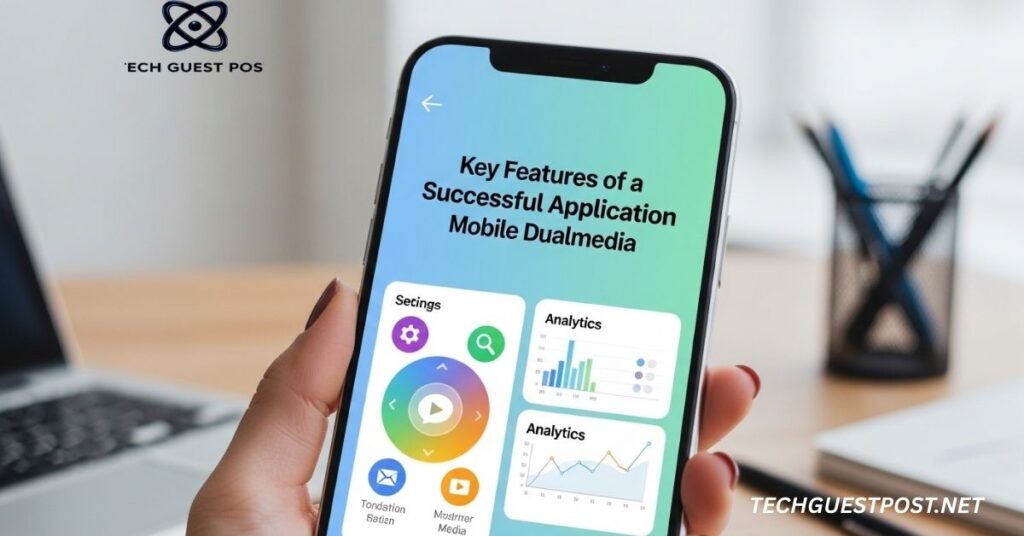
Not every app that combines video and audio qualifies as a true dualmedia platform. There are specific features that separate the good from the great.
Seamless Media Integration
The hallmark of any strong dualmedia app is how naturally its media types blend together. There should be no jarring transitions, no loading delays between formats, and no disconnect between what you see and what you hear. Seamless integration means the user doesn’t even notice the technology. They just experience the content.
Adaptive User Interface
Mobile user interface design in dualmedia apps must respond to context. If a user is watching a video in landscape mode and then rotates the screen, the interface should adapt instantly. Responsive app design isn’t just about screen size anymore. It’s about context, behavior, and media type. The UI should feel natural regardless of what format the user is engaging with.
Real-Time Interaction
Real-time interaction apps allow users to participate in the content experience, not just consume it. Think of live polls during a video stream, interactive tutorials that respond to user input, or augmented reality features that overlay information onto a live camera feed. This level of interactivity transforms passive viewers into active participants.
Cloud-Based Infrastructure
Behind every smooth dualmedia experience is a robust cloud-based mobile solution. Cloud infrastructure handles the heavy lifting of media storage, processing, and delivery. It scales automatically when traffic spikes. It ensures that content reaches users quickly regardless of geography. Without cloud support, delivering high-quality multimedia at scale simply isn’t viable.
Advanced Analytics
Mobile analytics tools embedded within dualmedia apps give developers and businesses a clear picture of how users interact with content. You can track exactly when users drop off during a video, which interactive elements get the most engagement, and how content personalization affects retention. These insights drive continuous improvement.
The Architecture Behind Application Mobile Dualmedia
Building a dualmedia app isn’t just about writing code. It’s about designing a system that can handle complexity gracefully.
Front-End Layer
This is what users see and interact with. The front-end layer must support multiple media renderers, adaptive layouts, and smooth transitions between content types. Frameworks like React Native or Flutter are popular choices here because they support hybrid mobile applications and allow developers to build once and deploy across platforms.
Media Processing Layer
This layer handles the encoding, transcoding, and streaming of media content. It’s responsible for converting video and audio files into formats that different devices can play back efficiently. This layer also manages the synchronization between different media types, ensuring that audio and visual elements stay perfectly aligned.
Data Management Layer
User preferences, content metadata, interaction history, and analytics all live in the data management layer. This layer connects to databases and content management systems, enabling the personalization engine to function. It’s also where content delivery logic gets processed, deciding what media to serve and when.
Integration Layer
This is where the app connects to external services. Payment gateways, social media platforms, third-party content providers, and APIs all come through the integration layer. It acts as the bridge between the app’s internal systems and the wider mobile ecosystem platforms.
Security Layer
A dualmedia app handles a significant amount of sensitive data, including user behavior, payment information, and potentially personal health or education records. The security layer encrypts data in transit and at rest, manages authentication, and protects against common vulnerabilities. Without a strong security layer, the entire system is exposed.
Application Mobile Dualmedia in Different Industries
One of the most exciting things about this technology is how broadly it can be applied.
Education
EdTech platforms are among the most aggressive adopters of dualmedia technology. Imagine a virtual science class where students watch a video explanation of a chemical reaction, listen to a narrated breakdown, and then interact with a 3D molecular model using augmented reality. This isn’t a vision of the future. Platforms like this already exist. Dualmedia apps for education create learning environments that are far more engaging and effective than traditional digital classrooms.
Entertainment
Streaming services and gaming companies were early pioneers in this space. Today’s entertainment apps combine video content with interactive narratives, user-generated audio overlays, and real-time social features. The user isn’t just watching. They’re participating. This shift toward immersive digital content has fundamentally changed what entertainment means on mobile.
E-Commerce
Dualmedia apps for e-commerce platforms have transformed how people shop. A customer can watch a product demo video, hear user testimonials in audio format, and interact with a 360-degree product viewer, all within a single app screen. This multi-sensory approach to shopping significantly increases purchase confidence and reduces return rates.
Healthcare
In healthcare, dualmedia apps serve both patients and professionals. Doctors use them for remote consultations that combine video calls with interactive diagnostic tools. Patients use them for guided therapy sessions that incorporate video, audio cues, and real-time feedback. The stakes are high in healthcare, so the accuracy and reliability of these apps are especially critical.
Corporate Communication
Companies use dualmedia platforms for internal training, executive communications, and virtual events. A corporate training module might combine video lectures, interactive assessments, and real-time Q&A sessions. This approach makes learning more engaging for employees and more measurable for HR teams.
Benefits for Businesses and Developers
Competitive Advantage
In a crowded app marketplace, differentiation is everything. An app that delivers a rich, interactive, multimedia experience stands out immediately. It’s harder to copy, harder to replicate cheaply, and more likely to earn loyal users.
Improved Conversion Rates
When users engage more deeply with content, they’re more likely to take action. Whether that action is making a purchase, signing up for a subscription, or completing a course, richer content experiences lead to stronger conversion outcomes.
Long-Term User Retention
Apps that evolve with their users retain them longer. A dualmedia platform can continuously update its content mix, introduce new interactive features, and personalize the experience over time. This creates a relationship between the user and the app rather than a transaction.
Efficient Content Management
Modern dualmedia platforms come with integrated content management tools that allow teams to update, schedule, and distribute media content without touching a single line of code. This efficiency frees up developer resources and empowers content teams to move faster.
Challenges in Developing Application Mobile Dualmedia
Nothing this powerful comes without its complications.
Technical Complexity
Building a system that handles multiple media formats, real-time interactions, and cross-platform synchronization simultaneously is genuinely hard. It requires a team with expertise across mobile development, cloud architecture, media engineering, and UX design. Not every development team has all of these skills under one roof.
Higher Development Costs
The best technology stack for dualmedia apps is not cheap. Cloud infrastructure, media processing servers, analytics platforms, and skilled developers all come with significant price tags. Businesses need to plan their budgets carefully and think long-term about their return on investment.
Performance Optimization
A media-heavy app that runs beautifully on a high-end smartphone might crawl on a mid-range device. Performance optimization requires constant testing across device types, network conditions, and operating system versions. It’s an ongoing process, not a one-time fix.
Security Risks
More data, more media, more integrations. All of this creates a larger attack surface for malicious actors. Challenges in developing dualmedia applications often center around keeping this expanded surface secure without slowing down the user experience.
How to Develop an Application Mobile Dualmedia Step by Step
Step 1: Market Research
Start by understanding your audience. Who are they? What devices do they use? What kind of content do they consume? What problems are they trying to solve? This research shapes every decision that follows.
Step 2: Define Media Integration Strategy
Decide which media types your app will combine and how they’ll interact. Will video be the primary format with audio enhancement? Will AR overlay data onto live camera feeds? Define this clearly before writing a single line of code.
Step 3: Design User Experience
Design the mobile user interface with the media experience in mind. Work with UX designers who understand how users interact with multimedia content. Prototype early and test with real users before committing to a final design.
Step 4: Choose the Right Technology Stack
This is one of the most critical decisions. Your stack must support media streaming, real-time interactions, cloud scalability, and cross-platform deployment. Popular choices include React Native or Flutter for the front-end, Node.js or Python for back-end services, and AWS or Google Cloud for infrastructure.
Step 5: Develop and Test
Build incrementally. Test each media integration layer before adding the next. Performance testing, security auditing, and user acceptance testing should all happen before launch. Don’t rush this phase.
Step 6: Launch and Optimize
Launch to a limited audience first. Gather data. Analyze how users interact with the dualmedia features. Identify friction points and optimize. Then scale.
The Future of Application Mobile Dualmedia
The trajectory here is clear and exciting. AI is already beginning to play a transformative role in mobile media integration. Machine learning algorithms can now predict what content a user wants before they ask for it, automatically adjust media quality based on network conditions, and generate personalized content experiences in real time.
Augmented reality apps are becoming mainstream. As devices become more powerful and AR development tools more accessible, expect to see dualmedia experiences that blur the line between the digital and physical worlds entirely. You’ll point your phone at a product in a store and immediately see a video review, hear user testimonials, and interact with a 3D rendering.
The role of AI in mobile media integration will only grow. From automated content tagging to real-time language translation of video content, AI is making dualmedia apps smarter, faster, and more relevant.
5G connectivity is another game-changer. With higher bandwidth and lower latency, the technical barriers to delivering high-quality dualmedia content on mobile will continue to shrink. This will open the door for experiences that simply aren’t possible today.
Why Application Mobile Dualmedia Is More Than a Trend
Some people will look at this and think it’s a phase. It isn’t. The shift toward integrated digital platforms is structural. It reflects a fundamental change in how people consume content and how businesses communicate.
Users have been trained by platforms like YouTube, TikTok, and Instagram to expect rich, interactive, multimedia experiences. Their expectations have been permanently recalibrated. An app that delivers a flat, single-format experience now feels like a step backward.
For businesses, the stakes are clear. Apps that deliver immersive, personalized, media-rich experiences build deeper relationships with users. They generate more data. They unlock more monetization channels. They create competitive advantages that are genuinely difficult to replicate.
This is not a trend. This is the new standard.
Final Thoughts
Building or investing in an application mobile dualmedia platform is a serious commitment. It requires thoughtful planning, skilled execution, and ongoing optimization. But the rewards, measured in user engagement, retention, and revenue, are substantial.
Whether you’re a developer looking to build your next project, a business leader evaluating your digital strategy, or simply someone curious about where mobile technology is heading, dualmedia is a concept worth understanding deeply.
The apps that will define the next decade won’t just show you content. They’ll create experiences. And those experiences will be built on the principles of integration, interactivity, and intelligent personalization that define application mobile dualmedia.
Start thinking about your app not as a single-purpose tool but as an integrated experience platform. That shift in mindset is where everything begins.
FAQ’s
What is application mobile dualmedia?
It’s a mobile app that combines multiple media formats like video, audio, and interactive content into one seamless, integrated experience.
How do dualmedia apps improve user engagement?
They deliver content in multiple formats simultaneously, which keeps users more stimulated, active, and invested in the experience.
What industries benefit most from dualmedia apps?
Education, healthcare, entertainment, e-commerce, and corporate communication all see significant improvements in user experience and outcomes.
How much does it cost to build a dualmedia mobile app?
Costs vary widely depending on complexity, but expect higher-than-average budgets due to the need for media processing, cloud infrastructure, and specialized development skills.
What is the best technology stack for a dualmedia app?
React Native or Flutter for front-end, cloud platforms like AWS or Google Cloud for infrastructure, and Node.js for back-end services are common and reliable choices.

Evan Cole is a tech enthusiast and digital strategist with years of experience in content marketing and SaaS trends. He explores emerging technologies, AI innovations, and SEO-driven growth strategies. Evan’s insights help readers understand complex tech topics through practical examples and real-world applications that inspire smarter digital solutions.